
The Future of Vessel Operations with AI Systems
A Smarter Era of Shipping Has Already Begun
No last-minute confusion.
No endless coordination calls between ports.
No waiting hours for status updates from different teams.
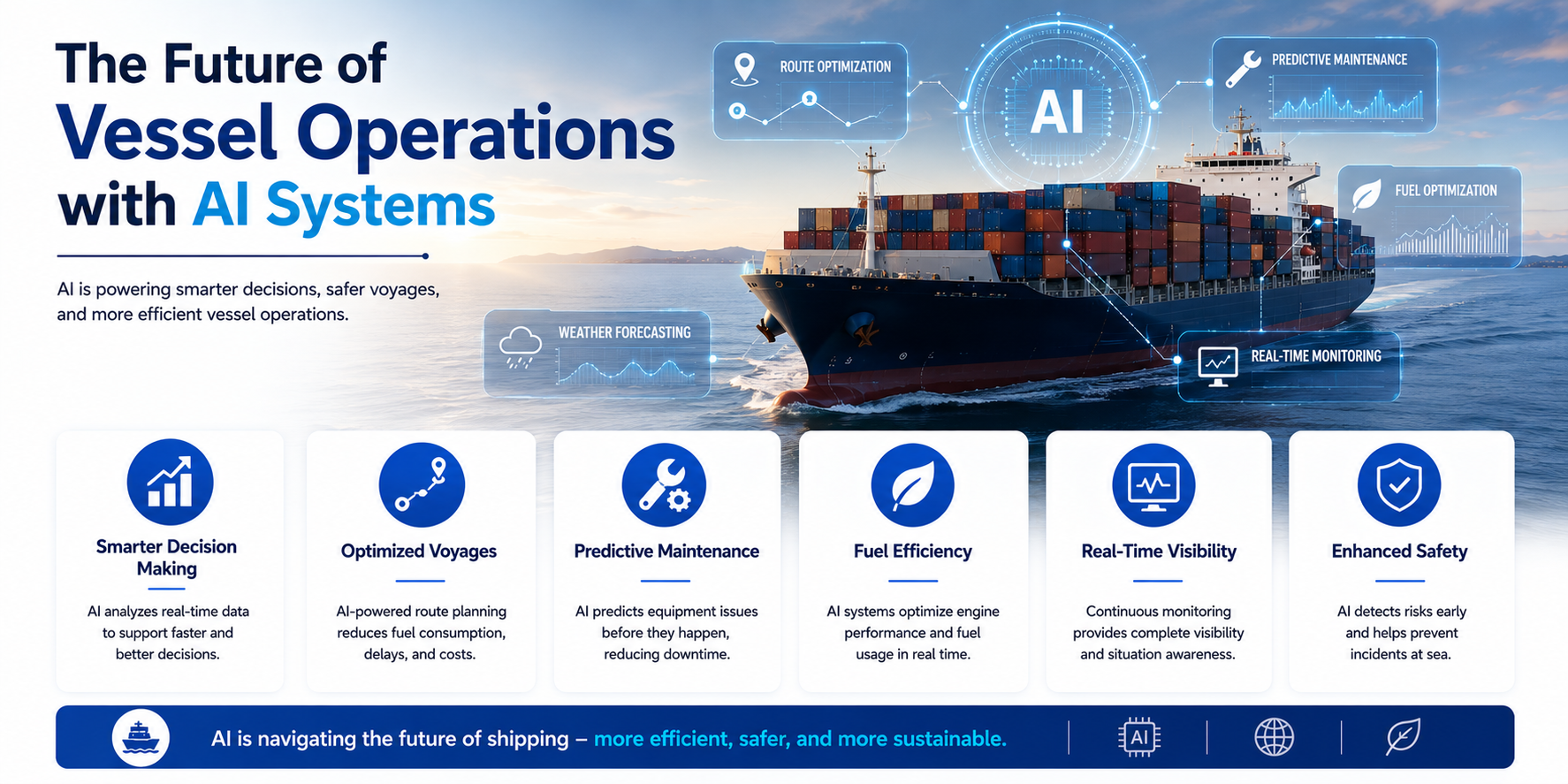
Instead, an operations manager monitors the entire voyage from a centralized dashboard, with real-time updates on vessel speed, fuel efficiency, weather disruptions, cargo status, berth availability, and ETA predictions.
This is no longer a futuristic concept.
AI-powered Vessel Operations are already reshaping how modern shipping companies manage global movement, reduce delays, and improve operational visibility.
And as Indian ports continue expanding under large-scale modernization initiatives, the shift toward intelligent maritime operations is accelerating faster than ever.
Vessel Operations involve the planning, coordination, and execution of maritime shipping activities, including route planning, cargo movement, fuel management, compliance, and port coordination. AI-powered Vessel Operations use predictive analytics, automation, and real-time vessel tracking to improve efficiency, reduce delays, optimize fuel usage, and enhance decision-making across global shipping networks.
What Vessel Operations Mean in Modern Shipping
Modern Vessel Operations go far beyond just moving ships between ports. They depend on tight coordination across the entire shipping ecosystem.
Key coordination points include:
Port authorities
Customs teams
Cargo handlers
Marine engineers
Logistics coordinators
Core operational areas include:
Berth allocation
Bunker fuel planning
Weather routing
Cargo scheduling
Even small delays in any of these areas can impact the full supply chain.
Today, Vessel Operations are becoming highly data-driven due to:
Rising cargo volumes
Increasing fuel costs
Stricter environmental regulations
Higher demand for faster delivery timelines
In India, this shift is especially visible as major ports like Mundra, Chennai, Visakhapatnam, and Nhava Sheva continue to see growing container traffic under ongoing maritime modernization efforts.
Why Traditional Vessel Management Struggles
Despite advancements in global shipping, many vessel management workflows still rely heavily on fragmented communication systems.
In many cases, operations teams still depend on:
Email-based coordination
Spreadsheet tracking
Manual reporting systems
Phone calls for real-time updates
Delayed visibility across ports
The result is operational blind spots.
A vessel delay is rarely just a scheduling issue. It can impact cargo availability, trucking schedules, warehousing timelines, customs clearance, and customer commitments across multiple countries.
Traditional maritime operations also struggle with:
Limited predictive visibility
Inefficient fuel planning
Slow response during weather disruptions
Port congestion uncertainty
Reactive maintenance planning
This is exactly where AI-driven shipping systems are beginning to transform maritime logistics.
How AI Is Transforming Vessel Operations
Artificial Intelligence is shifting Vessel Operations from reactive control to predictive decision-making.
Instead of responding to issues after they occur, AI analyzes maritime data to prevent disruptions early.
AI in Vessel Operations can:
Predict port congestion
Optimize routes using weather and fuel data
Improve ETA accuracy
Detect performance anomalies
Automate documentation & compliance
Monitor fleets in real time
Reduce fuel consumption
It also integrates with:
AIS systems
ECDIS navigation
Fleet dashboards
Predictive maintenance tools
Smart port infrastructure
This shift toward intelligent automation is one of the most significant changes in modern shipping.